
Dead Sea – Route
The 1957 Jerusalem – Dead Sea route was very long and winding
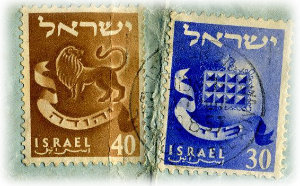
Letter Excerpts:
“I woke up at 5 AM.
We boarded the buses
(from Jerusalem).
“We hit Beer Sheva. It looked like a Western Boom town…”
“From Be’er Sheva…I went for a swim into the Dead Sea.
— July 23, 1957, 2pm

The original Elite factory in Ramat Gan surrounded by open fields.
The same factory years later in the bustling city of Ramat Gan.
Today, a large residential building known as “Elite Towers” stands on the original Elite factory site.
Travelling to Masada and Ein Gedi from the southern section of the Dead Sea was only possible by jeep with no access for tourist buses.
A Long, Roundabout, Rough Ride from Jerusalem
The world famous Dead Sea (the “Salt Sea”), one of the “wonders of the world,” is a must see for anyone visiting Israel. However travelling to, and enjoying the Dead Sea experience in 1957 was a much different than it is today.
There was no direct route from Jerusalem to the Dead Sea in 1957. Israelis could only access the southern part of the Dead Sea since the northern Dead Sea was controlled by Jordan and off limits to Jews and Israelis. The only way to get to the Dead Sea then was via a very long, round-about route. It meant traveling from Jerusalem west to Latrun, and then going south to Beer Sheva and then east, passing what is now known as Arad, until finally reaching the southern Dead Sea.
In total, the ride from Jerusalem to the Southern Dead Sea took approximately four hours on mostly unmaintained and windy roads. Today, it takes about forty minutes to reach the northern Dead Sea from the outskirts of Jerusalem and one and a half hours to reach the southern, tourist center of the Dead Sea. (In 1957 Judea and Samaria – also known as the West Bank – was controlled by Jordan and one could not travel directly east from Jerusalem to the Dead Sea.)
Map Key
Violet Route:
The old 1957 route from Jerusalem to the Dead Sea was long & roundabout, passing through Beersheba and Dimona.
Blue Route – Post 1967:
Today’s road going east from Jerusalem directly to the Dead Sea, passing the new Israeli city of Maale Adumim.
Red Lines: 1957 Borders
The eastern border (thick red line) was with Jordan. In 1957 Jordan controlled Judea-Samaria (the light-green shaded area) which included East Jerusalem, Maale Adumim and most of today’s direct route to the Dead Sea.
The south-western border (thick red line) was with Gaza and Egypt.
Today, paved roads connect the entire length of the Dead Sea (passing Masada and Ein Gedi) straight to Jerusalem.
Where was Masada? Where was Ein Gedi?
Notably missing from the author’s 1957 Letters was “Masada” and “Ein Gedi,” which today are are among some of the most popular sites in Israel, and one of the favorite pilgrimage locations for Jewish youth groups.
While Masada is one of the most popular tourist destinations in Israel today, in 1957 Masada stood isolated with no paved roads. Access to sites like Masada and Ein Gedi was limited to jeeps and other off road vehicles. Certainly, there were no tour buses or commercial vehicles. Those who did visit Masada during these times were archaeologists who began light excavations.
In later years, a road along the Dead Sea was paved, making access to the area much easier. Once the roads were paved, the bus tours began. In time, large parking lots, public bathrooms and restaurants to accommodate the wave of visitors were established. By the 1970’s, luxurious hotels were built, along with a tourism complex that capitalized on the underlying attributes of the Dead Sea area.
Limited Facilities & Access
No hotels, no access to north DS, nor Masada, nor Ein Gedi unless in Jeep.
Travelling to Masada and Ein Gedi from the southern section of the Dead Sea was only possible by jeep with no access for tourist buses.
Access to the Dead Sea in 1957 was Very Limited
The world famous Dead Sea (the “Salt Sea”), one of the “wonders of the world,” is a must see for anyone visiting Israel. However travelling to, and enjoying the Dead Sea experience in 1957 was a much different than it is today.
In 1957, there was no quick direct route from Jerusalem to the Dead Sea. Israelis could only access the southern part of the Dead Sea. The northern part was controlled by Jordan. (Only after the 1967 Six-Day War did this change).
The only way to get to the Dead Sea then was via a very long, round-about route. It meant traveling from Jerusalem west to Latrun, going south to Beer Sheva, then east, passing what is today known as Arad, until finally reaching the southern Dead Sea.
In total, the ride from Jerusalem to the southern Dead Sea could take almost four hours on mostly old and windy roads.Today, it takes about forty minutes to reach the northern Dead Sea and one and a half hours to reach the southern Dead Sea when traveling directly east from Jerusalem.
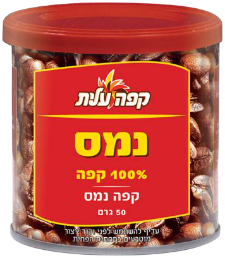
“Kafe Nemes”
The original Elite “Kafe Nemes” (instant coffee) continues to be a popular drink in Israeli households.
Strauss Acquires Elite
In 1997, Elite was purchased by Strauss, Israel’s largest food company, and greatly expanded its line of products. Elite produces the hazelnut filled “Egozi”, the creamy “Pesek Zman”, the crunchy “Kif Kef”, and many new products. It also makes sugarless chocolate bars for diabetics.
Ramat Gan Factory Moves to Upper Nazareth
In 2003, Elite-Strauss closed the Ramat Gan factory and moved its operations to their newer factory in Upper Nazareth where land was cheaper. The factory was expanded and expanded its product line. Today, groups participate in an exciting tour of the factory.
Land Sale to Trump Partners
In 2006, this land was sold to the Crescent Group which involved Donald Trump. The group had plans to develop a 70-story luxury tower building that would carry Trump’s name. The building was never built and the land was sold 18 months later. Today, “Elite Towers” stands on the original factory site.