
Dead Sea & Surroundings
The Dead Sea is one of the world’s natural wonders
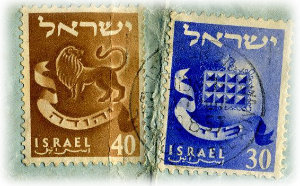
Letter Excerpts:
“From Be’er Sheva…I went for a swim into the Dead Sea.“
“You could stay on top of the water and can’t drown even if you wanted to. I swam almost a third of the way and paddled back on my back.
It felt great.”
“We stopped at the Dead Sea and saw the potash & bromide factories. They have huge salt drying ponds.”
— July 23, 1957, 2pm

The Dead Sea, (in Hebrew, “Yam Ha-Melakh” – the “Sea of Salt”) is the lowest point on earth and is surrounded by the stunning landscape of the Negev Desert. The extremely high concentration of saline water in the sea give lead to the name “Dead Sea”, being that no fish can survive in these waters. Its salty water is known for its health and healing properties. Another unique aspect of the Dead Sea waters is, “You can stay on top of the water and cannot drown, even if you wanted to.”
The Dead Sea coast with whitish salt formations in the shore area.
Floating on the Dead Sea:
“You could stay on top of the water and can’t drown even if you wanted to.”
The Healing Powers of the Dead Sea
The salt of the Dead Sea (in Hebrew, the “Salt Sea”) is so full of salt that nothing can live in it (hence, “Dead Sea”). However, the minerals in the water are highly therapeutic for many skin conditions and health conditions.
Today a world class Israeli company known as “Ahava” markets mineral products from the Dead Sea. Ahava started in 1988 as a single stand selling bottles of body scrub to tourists, generating $1 million that year. Ziva Gilad, a spa technician, came up with the idea of marketing Dead Sea mud after watching tourists scooping up the mud and applying it to their bodies.
Today, Ahava sells many of its products to tourists who visit their factory store by the Dead Sea and export their products all over the world.
“Ahava” Dead Sea healing and cosmetic products are sold worldwide.
Dead Sea “mud” is known for it’s natural therapeutic properties.
Ein Gedi
Once access to the Dead Sea area improved after 1967, other sites besides Masada turned into premier hiking spots. One of these must-visit sites is Ein Gedi, which is located in the Judean Desert, on the western shore of the Dead Sea.
Ein Gedi was destroyed and abandoned during the first Jewish rebellion against Rome (66-70 CE). Like Masada, Ein Gedi was an important outpost of the rebels during the Bar Kochba Revolt, as recorded in the Bar Kochba letters found in the Dead Sea area. Today, Ein Gedi is the largest oasis in Israel, with springs and waterfalls which flow from the brooks at the foot of the cliffs.
One of the many waterfalls of the Ein Gedi Nature Reserve.
Gazelles and other wildlife are part of the Ein Gedi landscape
Ein Gedi & The Dead Sea Contrasted
Even though the Dead Sea region is barren desert with minimal rainfall, the tiny area of Ein Gedi is flowing with natural water all year round. The contrast between the Dead Sea and Ein Gedi, so close to one another, is nothing less than amazing. Crossing a road a place where the water is totally undrinkable to an oasis of delicious spring water – only in Israel!
The author at the Dead Sea with his two sons, 1970
Shortly after the swim in the salty Dead Sea, the author and his sons enjoy the sweet, fresh waters of Ein Gedi.
Dead Sea Works
The Dead Sea Works originally established in 1929, is one of the world’s largest producers of potash (concentrated salts & minerals used as fertilizer potassium).
The evaporation ponds of the Dead Sea Works, 1950’s.
Map Key
Violet Route:
The old 1957 route from Jerusalem to the Dead Sea was long & roundabout, passing through Beersheba and Dimona.
Blue Route – Post 1967:
Today’s road going east from Jerusalem directly to the Dead Sea, passing the new Israeli city of Maale Adumim.
Red Lines: 1957 Borders
The eastern border (thick red line) was with Jordan. In 1957 Jordan controlled Judea-Samaria (the light-green shaded area) which included East Jerusalem, Maale Adumim and most of today’s direct route to the Dead Sea.
The south-western border (thick red line) was with Gaza and Egypt.
Today, paved roads connect the entire length of the Dead Sea (passing Masada and Ein Gedi) straight to Jerusalem.
Missing from the 1957 Tour – MASADA
Notably missing from the sites visited during the ‘57 trip to the Dead Sea is “Masada”, which today is one of the most iconic sites in Israel, and one of the favorite pilgrimage locations for Jewish youth groups. Masada is an ancient fortress in southern Israel’s Judean Desert built around
30 B.C.E. It’s on a massive plateau overlooking the Dead Sea. Herod the Great, King of Judea, originally built Masada as a castle complex. The large complex later served as the last Jewish stronghold in the Great Revolt against Rome. Even after the Temple was destroyed in 70 CE, the residents of Masada held out for another three years. When they saw that defeat was imminent, they committed mass suicide instead of surrendering.
Those who did visit Masada during these times were archaeologists who began light excavations. In 1963, the excavations intensified, and in 1966, the site was declared a national park by the Israel Nature and Parks Authority, with a cable car scaling the mountain built in 1977.
Birthright/Taglit Bar & Bat Mitzvahs
Today, Masada is one of the most popular tourist destinations in Israel. Birthright groups as well as other youth groups regularly visit there. Many unaffiliated Jewish youth who never had a bar or bat mitzvah, enjoy the heartwarming experience of celebrating their bar or bat mitzvah in later years atop Masada.
Video excerpts
of a Birthright-Taglit
Bar and Bat Mitzvah
at Masada
A Symbol of Allegiance
The chief of staff of the Israel Defense Forces (IDF), Moshe Dayan, initiated the practice of holding the swearing-in ceremony on top of Masada for soldiers who had completed their basic training. The ceremony ended with the declaration: “Masada shall not fall again.” The soldiers climbed the Snake Path at night and were sworn in with torches lighting the background. Today, these ceremonies are also held at various other locations, including the Armored Corps Memorial at Latrun, the Western Wall and Ammunition Hill in Jerusalem, Akko prison, and training bases.
IDF Swearing-In Ceremony
at Masada
Limited Facilities & Access
No hotels, no access to north DS, nor Masada, nor Ein Gedi unless in Jeep.
Travelling to Masada and Ein Gedi from the southern section of the Dead Sea was only possible by jeep with no access for tourist buses.
Access to the Dead Sea in 1957 was Very Limited
The world famous Dead Sea (the “Salt Sea”), one of the “wonders of the world,” is a must see for anyone visiting Israel. However travelling to, and enjoying the Dead Sea experience in 1957 was a much different than it is today.
In 1957, there was no quick direct route from Jerusalem to the Dead Sea. Israelis could only access the southern part of the Dead Sea. The northern part was controlled by Jordan. (Only after the 1967 Six-Day War did this change).
The only way to get to the Dead Sea then was via a very long, round-about route. It meant traveling from Jerusalem west to Latrun, going south to Beer Sheva, then east, passing what is today known as Arad, until finally reaching the southern Dead Sea.
In total, the ride from Jerusalem to the southern Dead Sea could take almost four hours on mostly old and windy roads.Today, it takes about forty minutes to reach the northern Dead Sea and one and a half hours to reach the southern Dead Sea when traveling directly east from Jerusalem.
Strauss Acquires Elite
In 1997, Elite was purchased by Strauss, Israel’s largest food company, and greatly expanded its line of products. Elite produces the hazelnut filled “Egozi”, the creamy “Pesek Zman”, the crunchy “Kif Kef”, and many new products. It also makes sugarless chocolate bars for diabetics.
Ramat Gan Factory Moves to Upper Nazareth
In 2003, Elite-Strauss closed the Ramat Gan factory and moved its operations to their newer factory in Upper Nazareth where land was cheaper. The factory was expanded and expanded its product line. Today, groups participate in an exciting tour of the factory.
Land Sale to Trump Partners
In 2006, this land was sold to the Crescent Group which involved Donald Trump. The group had plans to develop a 70-story luxury tower building that would carry Trump’s name. The building was never built and the land was sold 18 months later. Today, “Elite Towers” stands on the original factory site.