
Speaking Hebrew (Ivrit)
Our Heritage and Birthright: The Hebrew Language
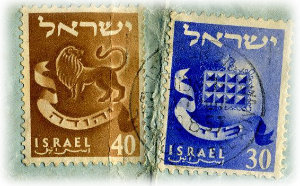
Letter Excerpts:
“I was met at the airport and we went by taxi to Jerusalem… On the way I conversed with the driver in Hebrew.”
“My ability to speak Hebrew made me very proud”.
— July 21, 1957
“I’m thrilled how easily I understand Hebrew.”
July 23, 1957
“Wednesday night I went in a border control car…we were well armed and had huge dogs that only understood Hebrew… they could kill a person in a second. The border guard introduced me to the dog, and after I spoke Hebrew, we were friends”
—Letter to younger brother Alan, August 16, 1957

What Are the Advantages of Learning Hebrew?
To understand the culture of the country and communicate with the people, it helps to know Hebrew – the more the better. Since our Bible and prayers are written in Hebrew, an understanding of the original language deepens our connection to the land and our heritage – Our Birthright.
While he was far from fluent, the author’s knowledge of Hebrew that he learned as a child in the USA was definitely a big plus for him on this first trip to Israel. It is best to learn Hebrew when young, but it is never too late, as written in Pirkei Avot (Ethics of the Fathers), “He who learns as a child, to what is he compared? To ink written upon new paper. And he who learns when old, to what is he compared? To ink written on a rubbed out paper.”
You can translate the holy language but you cannot translate the holiness of the language. The Hebrew language is intrinsically holy. G-d created the world and all existence using permutations of the twenty-two Hebrew letters.
Learning Hebrew in the classroom or through the internet is not enough. One must converse and practice with others in Hebrew outside of the classroom too. The rule is, the more one uses his Hebrew, the faster he will pick it up.
In one of his letters to his younger brother Alan, dated July 25, 1957, the author wrote in large Hebrew letters:
“I speak only Hebrew”,
אני מדבר פה רק עברת
“Anie medaber po rak Ivrit.”
He wrote vowels under the letters so his younger brother could better understand. He even employs humor to get his message across: “We…had huge dogs that only understood Hebrew…”
From the author’s letter to his brother
where he wrote in Hebrew:
“I only speak Hebrew here.”
In 1957, even though many new immigrants from a particular country lived in ma’abarot and neighborhoods together, they made a deliberate effort to speak Hebrew between themselves and their children, rather than continue to speak in their native language. Thus, they acquired the language quickly.
Today, many of the new immigrants move into communities with the same ethnicity. Families and friends continue to speak in their native tongue. For example, Americans move into a place like Efrat, Hashmonaim, Ramat Bet Shemesh or Raanana with other Americans and continue to speak English. Russians move into communities with other Russians and continue to speak Russian, while French immigrants in Netanya continue to speak to their friends and family in French.
In summary, to truly acquire a working knowledge of Hebrew, one must make an ongoing, concerted effort to practice and speak it. Below are misc. links including videos teaching Hebrew at different levels.
Teaching the Aleph-Bet for Beginners
LINKS:
Bob quoting from the Book of Isaiah in Hebrew: Still remembering at the age of 83: https://vimeo.com/446219882
Cute children’s Aleph-Bet video: https://youtu.be/UiCzoTs1AdE
Hebrew in Three Minutes: https://vimeo.com/454082500
Another Hebrew in Three Minutes: https://www.youtube.com/watch?v=_UU6Fe7lqIo
Hebrew Slang – By Roni (Not for Children): https://www.youtube.com/watch?v=cbyBHvtW_E0
Hebrew Games: https://hebrew-language.com/hebrew-games/
.